QuickWave
software for electromagnetic design
QW-BHM - Basic Heating Module
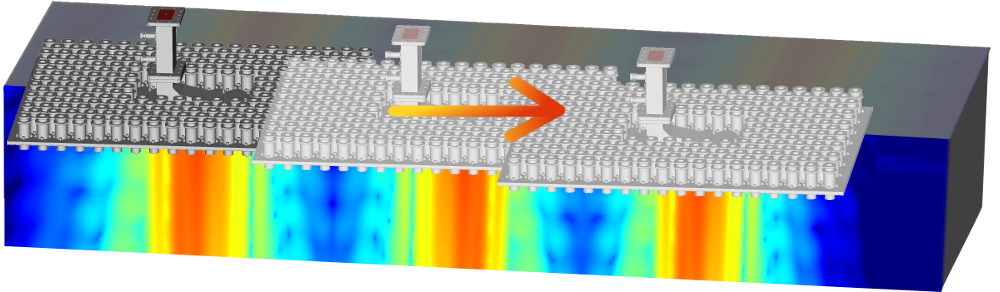
Standard electromagnetic (EM) simulators assume that a particular scenario remains invariant throughout the analysis. This assumption is not met when modelling practical microwave power processes since constitutive parameters of all typical foodstuffs, timber, rubber and other treated materials vary substantially as a result of heat dissipation, temperature rise and/or phase changes. Moreover, the load may be rotating (as in a house-hold oven) or shifting (as in industrial tunnel applicators). It may also be advantageous to analyse EM effects coupled to the thermodynamic ones.
QWED has started the development of specialised versions of its QuickWave software, which obviate the above limitations of standard EM solvers, and facilitate faster and more accurate simulations of microwave power processes. Basic Heating Module for QuickWave (further referred to by an abbreviation QW-BHM) is the first module of the family. It provides a novel regime of operating the FDTD solver, with modification of media parameters as a function of dissipated energy. It also facilitates load rotation, heat flow analysis through the QW-HFM (Heat Flow Module) module and provides a regime of automatic tuning of the source to the deepest in-band resonance.
QW-BHM allows describing any medium of the dielectric isotropic or dielectric anisotropic type in the scenario in a separate medium text file, containing tabulated values of constitutive parameters (e, m, s, sm - possibly anisotropic; also specific heat capacity, density, and heat transfer parameters) versus enthalpy and/or temperature. Each medium file should be of the same name as the name assigned to the corresponding medium in QW-Editor, with *.pmo extension. All media files must be placed in the current project directory.
Initial temperature distribution T0(x,y,z) can be defined in QW-Editor, by assigning a particular value of the temperature to each medium. If the medium has its *.pmo file, and both temperature and enthalpy are listed in that file, initial enthalpy H0 corresponding to the initial temperature T0 of the medium is read from the file. Otherwise initial enthalpy of the medium is assumed to be zero.
QW-Editor also allows the user to define specific heat capacity and density for each medium. These values will further be applied for converting enthalpy distribution to temperature distribution, if such a conversion cannot be accomplished based on the *.pmo file. However, values of specific heat capacity and density defined in QW-Editor are ignored by QW-HFM, which requires them to be listed in *.pmo files.
QW-Simulator always starts its operation by converting the shape and material data into the so-called lcsm matrices. We shall call this stage the lcsm compilation. QW-BHM makes two changes in this regard. Firstly, during the lcsm compilation the QW-Simulator looks for media files. If a particular medium file is found, its contents (at a particular temperature or enthalpy) supersede the default settings of constitutive parameters made in QW-Editor. Secondly, the lcsm compilation can be repeated during the simulation, taking new values of media parameters, which correspond to the current temperature or enthalpy. This modifies the matrices while maintaining the same divergence-free field distribution.
QW-BHM
Designed by Janusz Rudnicki
Updated: March 20, 2008
The QW-BHM module has been developed in a way that leaves open the possibility to communicate with external applications. Such tools can be used to model effects, which are not supported in the standard version of the QW-BHM. The QW-HFM module is an example external tool that supplements the QW-BHM in modelling of the heat transfer effect. Thanks to this application users who work with microwave heating applications can ensure greater accuracy of the simulations done with the QuickWave package.
The QW-HFM is a stand-alone application that communicates with the QW-BHM module and the QuickWave package through text files generated automatically during simulation. The files contain data on the current enthalpy field, dissipated power field and the temperature. The QW-HFM applies the heat transfer equation to these data in order to obtain the diffused enthalpy field (the diffusion time depends on the QW-BHM time step specified by the user) and returns the results back to the QW-BHM module.
Two modes of operation of the QW-HFM module are currently available. The first one is based on implementation of the FDTD algorithm applied to solve the heat flow equation. In this mode all the computations are done internally by the QW-HFM module. The other available mode is CFD-based operation where QW-HFM plays a role of an intelligent interface between the QuickWave software and an external fully-fledged CFD code. It can be used in cases where not only heat diffusion model is needed but also models that account for radiation in cavities, mass transfer effect, etc.
QW-HFM - Heat Flow Module
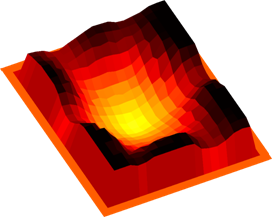
The comparison of the temperature distribution in the lossy sample:
a) the heat transfer not taken into account;
b) the heat transfer effect modelled with the FDTD algorithm implemented in the QW-HFM application;
c) the heat transfer effect modelled with the Fluent package
Frequency tuning
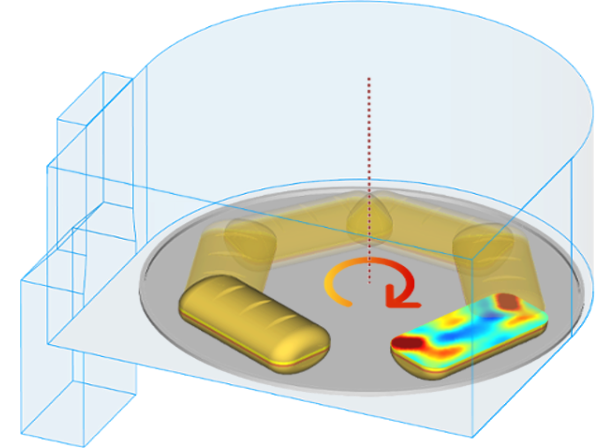
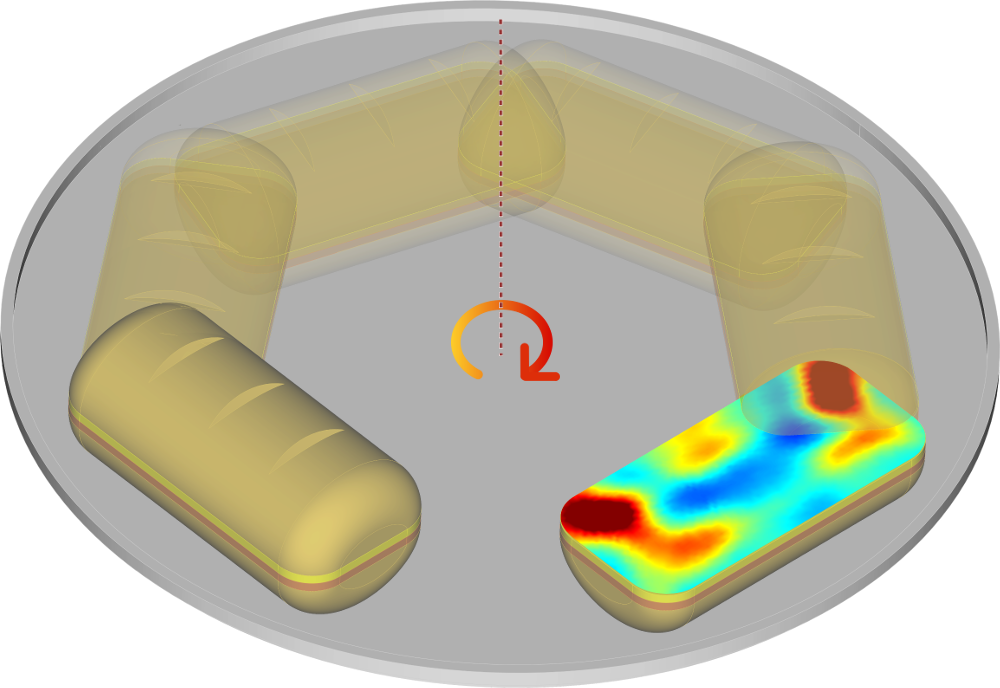
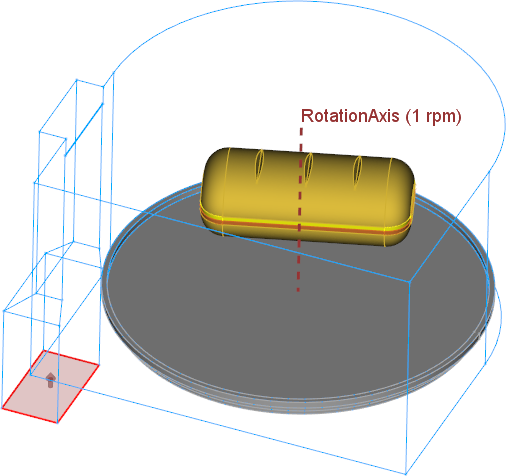
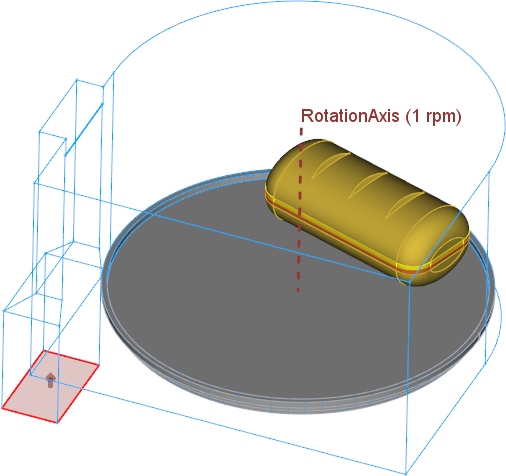
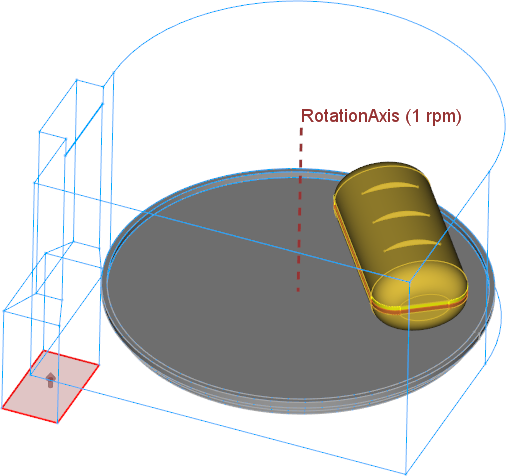
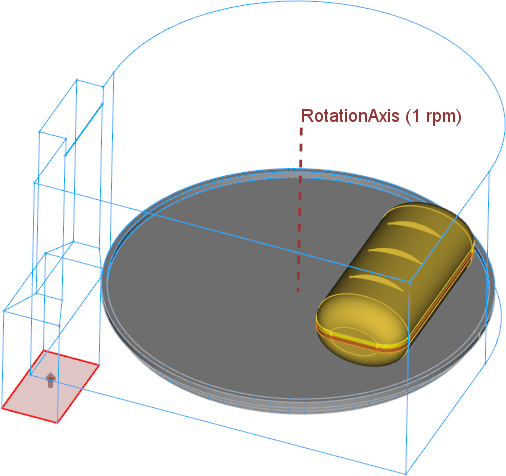
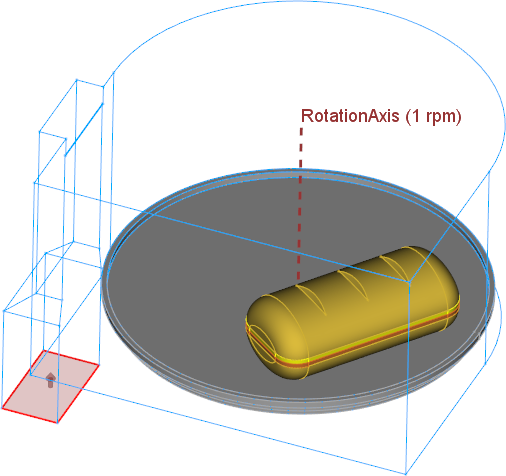
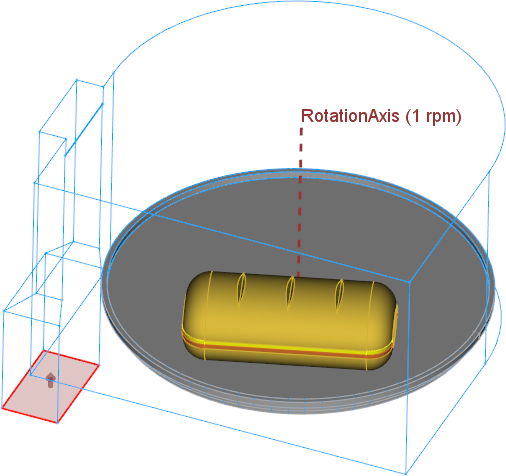
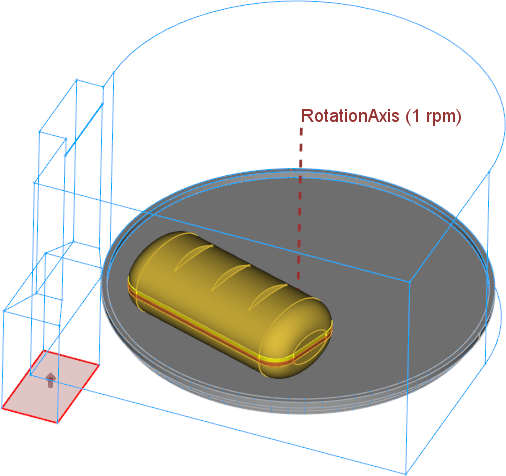
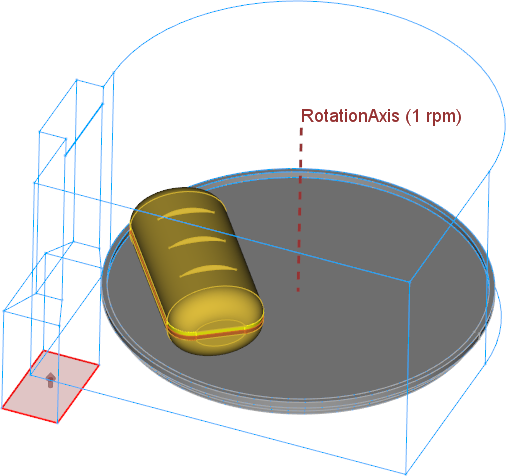
Modelling of heating of rotating loads
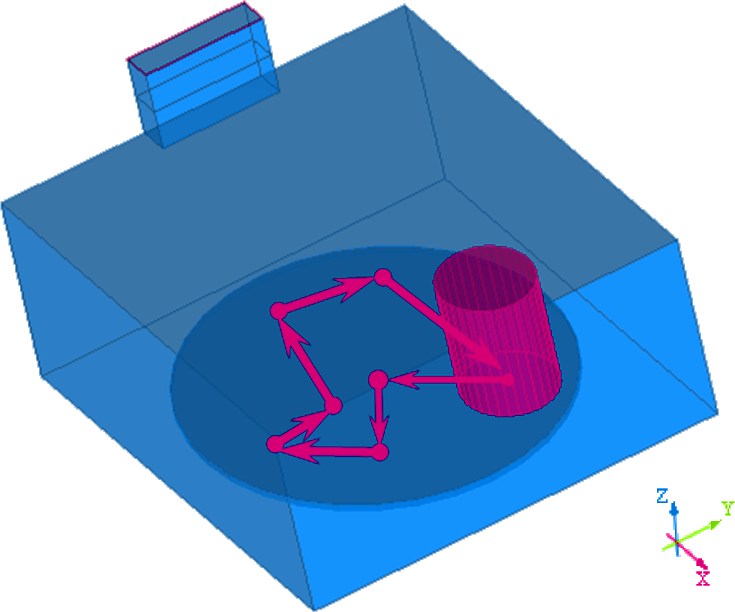
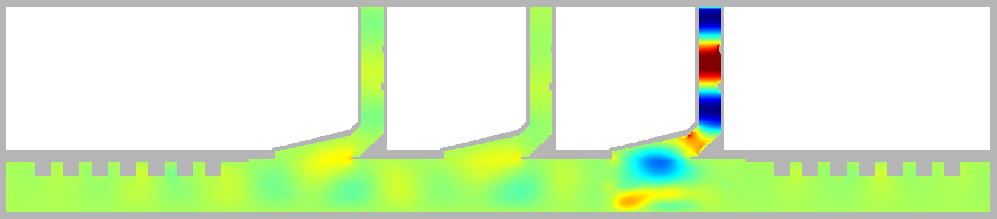
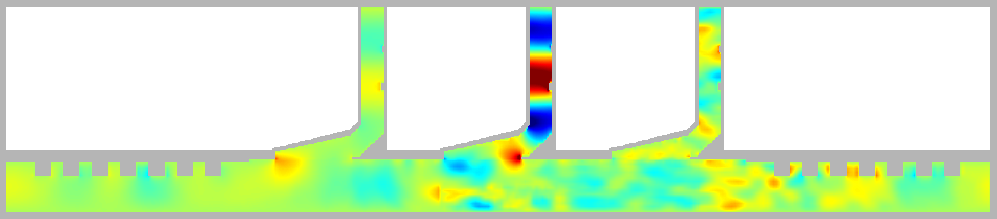
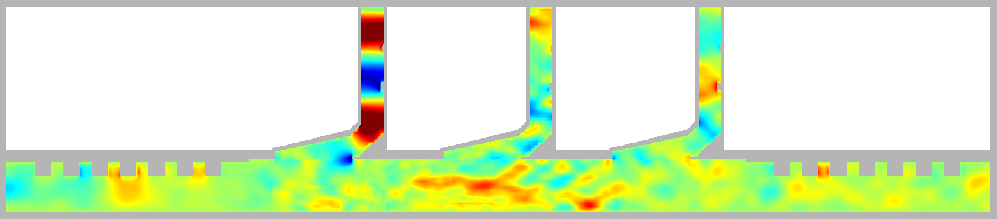
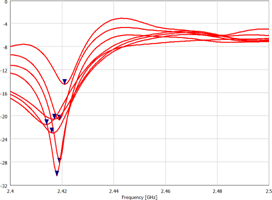
The approach of applying a monochromatic source is the most popular one in microwave power modelling and has been followed so far. However, it does not reflect all phenomena that occur in real life applications. The most widespread microwave power source, a magnetron, is an imperfect device gradually changing its frequency during the heating, and in fact, it may even “jump” from one frequency to another. Let us quote here the two effects of frequency “pulling” by the load and “pushing” by the power supply. Although both have been deeply investigated, the question about the actual operating frequency (or frequency spectrum) of the magnetron as a function time, and for a particular load, is still puzzling for many designers, especially those dealing with small low-loss loads.
To enhance the adequacy of QW-BHM for microwave power engineers, QWED has started implementing its new regimes, which will mimic the physical behaviour of various real power sources under various conditions. In version 6.5 we have introduced the first such regime. It assumes that the source tunes automatically to the deepest resonance in the considered frequency band. We recognise that this may be an oversimplified approach to such unpredictable devices as magnetrons. However, we treat it as a starting point for further more elaborate regimes, for example, based on the digitised Rikke diagrams. Moreover, our present assumption perfectly suits microwave power applications with solid state power sources, where the return loss versus frequency can be monitored in time, and the source frequency can be tuned to the deepest resonance by the controller, so as to maximise the matching.
QW-BHM module is a tool developed in order to address the needs of users working in the microwave power area and especially with microwave heating applications. Due to a wide variety of physical phenomena that may occur during heating, QW-BHM has been developed in a way, which makes it possible to use it jointly with external applications. As explained previously, such external modules can account even for most complex physical effects. However, one important issue has been neglected up to this point - load rotation during heating.
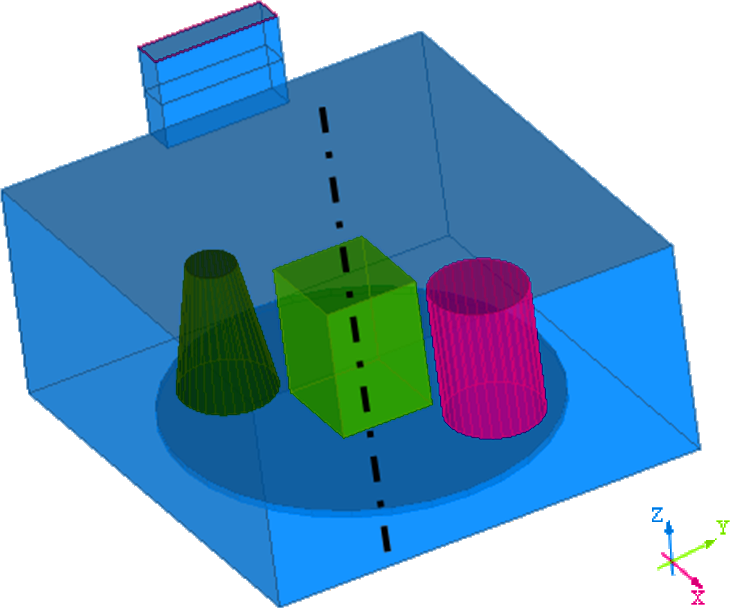
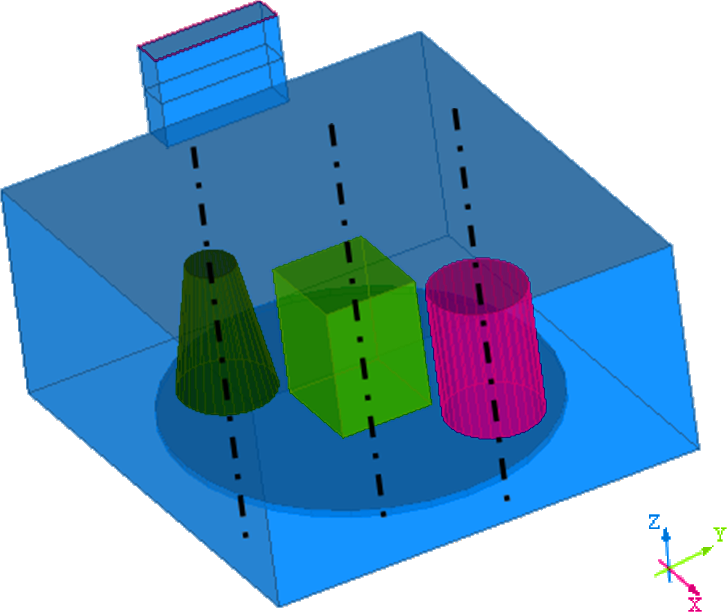
In a typical domestic microwave oven a more uniform temperature distribution within the load is obtained through rotating of the load during heating. Such slow movement of the heated object may to a great extent affect the temperature field. In order to maintain high computational accuracy also in such scenarios, the QW-BHM module has a built-in mechanism accounting for this effect.
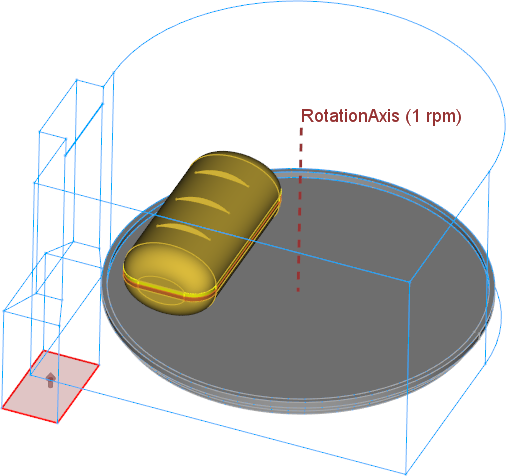
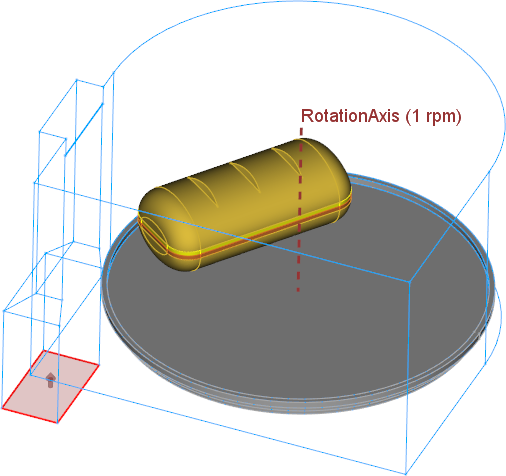
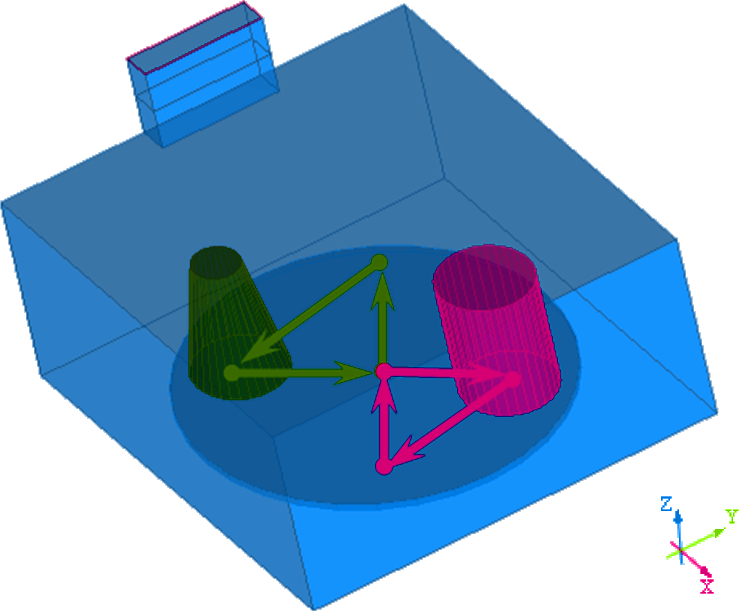
The load rotation mechanism lets the user simulate heating of arbitrarily shaped objects rotating around any point chosen on the XY plane. Thanks to this feature it takes just a few mouse clicks to prepare all the data necessary to perform simulation of such problems for specified heating time during which the object is being rotated with a given angular speed.
QW-BHM automatically modifies media parameters in thousands of FDTD cells filled with different media and heated up differently - all accomplished in a matter of seconds!
Each “thermal” iteration requires many FDTD iterations to reach the new electromagnetic steady state starting from the previous steady state - but less than would be needed to reach the new steady state starting from the initial zero field distribution.